
The second Escape from Alcatraz: Theodore Cole and Ralph Roe (1937)
Summary
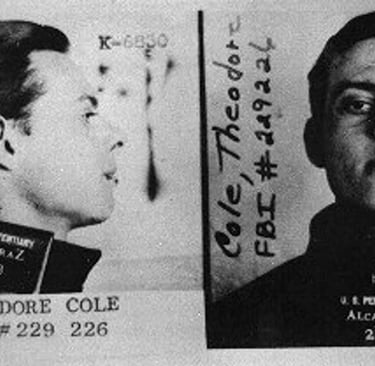
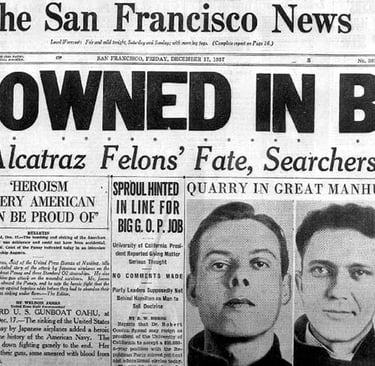
The first men to successfully get off Alcatraz Island were Theodore Cole and Ralph Roe, who disappeared on December 16, 1937. Unlike earlier escape attempts that ended with inmates being captured or killed on the island, Cole and Roe managed to break out of the prison, reach the shoreline, and vanish into the waters of San Francisco Bay. Their bodies were never recovered, making their fate one of the greatest mysteries in Alcatraz history.
Background
When Alcatraz became a federal penitentiary in 1934, it was considered virtually escape-proof. The prison sat on an isolated island approximately 1.5 miles (2.4 km) from the San Francisco shoreline. The surrounding waters were extremely cold, with powerful currents and unpredictable tides. Prison officials believed these natural defenses made escape impossible.
Theodore Cole
Born in Kansas in 1912.
Convicted of kidnapping.
Sentenced to 50 years in prison.
Known for previous escape attempts before arriving at Alcatraz.
Ralph Roe
Born in 1906.
Convicted bank robber.
Serving a 99-year sentence.
Had a reputation as an experienced prison escape artist.
The two men had known each other before arriving at Alcatraz and were transferred there together from Oklahoma prisons.
Planning the Escape
Cole and Roe worked in the prison's Mat Shop, located in the Industries Building on the northwest side of Alcatraz Island.
The Mat Shop produced floor mats for government agencies and gave inmates access to tools and a degree of privacy unavailable in the main cell blocks. Over several months, the pair secretly filed through the flat iron bars covering a workshop window. They carefully concealed their progress until the opening was large enough for both men to squeeze through.
The location was particularly advantageous because parts of the building were difficult for tower guards to observe directly. Prison officials had already expressed concerns about the area.
December 16, 1937: The Escape
Weather Conditions
On the day of the escape, San Francisco Bay was covered by unusually dense fog.
Visibility was extremely poor, creating the perfect cover for an escape attempt. At the same time, storm conditions produced powerful currents and rough water.
Timeline
1:00 PM
Routine inmate count conducted.
Cole and Roe are present and accounted for.
Between 1:00 PM and 1:30 PM
The pair remove the final obstruction from the workshop window.
They climb through the opening.
Using a wrench stolen from another prison work area, they break the lock on a security gate.
They descend approximately 20 feet to the shoreline below.
1:30 PM Count
Guards discover both inmates missing.
An immediate alarm is sounded.
The prison goes into lockdown.
Search and Investigation
A massive search operation followed.
Search Efforts Included
Armed prison guards.
Coast Guard vessels.
FBI investigators.
Local law enforcement agencies.
Searches of caves and rocky shoreline areas around Alcatraz.
Investigators found:
A damaged workshop window.
Cut iron bars.
The wrench used to break the fence lock.
Evidence showing the escape route.
No trace of the prisoners themselves was found.
Did They Drown?
Most officials concluded that the pair likely drowned.
Reasons include:
Water temperatures were dangerously cold.
Strong winter currents swept through the Golden Gate.
A storm was moving through the bay.
Neither man was known to be an exceptional swimmer.
No confirmed sightings occurred immediately after the escape.
The Bureau of Prisons officially lists them as:
"Missing and presumed dead."
Evidence They May Have Survived
The mystery persists because no bodies were ever recovered.
Over the years, reports surfaced claiming:
Sightings of the fugitives in Oklahoma.
Possible appearances elsewhere in the United States.
Rumors that they escaped to South America.
Some historians have suggested that the dense fog may have allowed an accomplice in a boat to approach the island without being seen. However, no evidence has ever proven this theory.
Impact on Alcatraz
The Cole-Roe escape shocked prison officials because it was the first time inmates had successfully left the island itself.
Although prison authorities maintained that the men drowned, the escape exposed weaknesses in Alcatraz's industrial work areas and forced security upgrades. It also damaged the prison's reputation as an "escape-proof" institution.
The escape inspired future inmates and demonstrated that reaching the water was possible. Twenty-five years later, the famous 1962 escape involving Frank Morris and the Anglin brothers would draw worldwide attention, but Cole and Roe were the first inmates to truly challenge Alcatraz's legend.
Key Facts
ItemDetailsDateDecember 16, 1937EscapeesTheodore Cole and Ralph RoeLocationMat Shop, Industries BuildingMethodFiled through window bars and reached shorelineWeatherDense fog and storm conditionsBodies Found?NoOfficial StatusMissing and presumed drownedHistorical SignificanceFirst inmates to successfully leave Alcatraz Island during an escape attempt
Historical Assessment
Most historians believe Theodore Cole and Ralph Roe died in San Francisco Bay shortly after leaving Alcatraz. However, because their bodies were never found, their escape remains officially unresolved. For many Alcatraz historians, they are considered the first men to successfully escape the prison itself, even if they may never have reached the mainland



Contact
If you have any questions, feel free to reach out at any time.
info@uspalcatraz.net