
The History of Alcatraz Island: From Discovery to the Federal Prison (1775–1934)
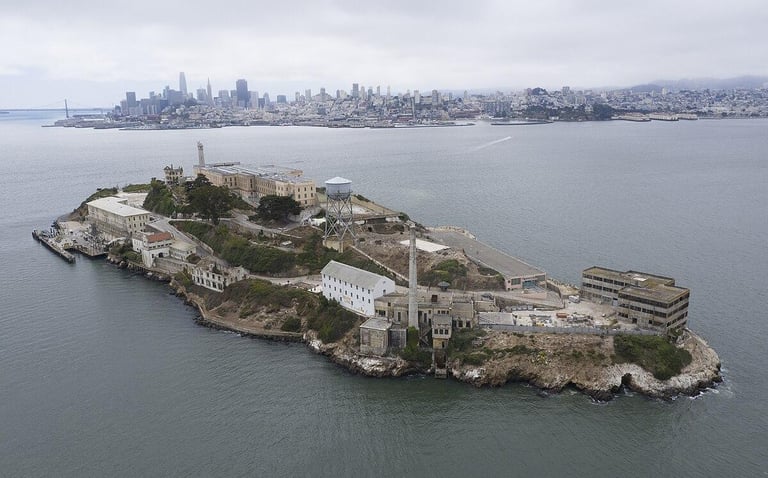
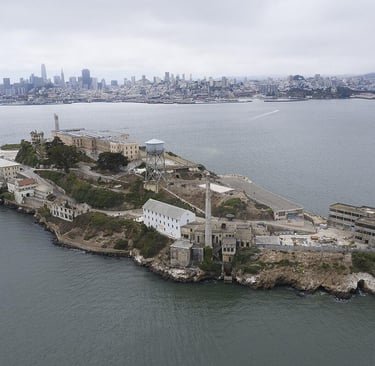
Today, Alcatraz Island is best known as America's most famous federal prison. However, for nearly 160 years before the first federal inmate arrived in 1934, the island served many different purposes. It was once a seabird sanctuary, a military fortress, the site of the first lighthouse on the U.S. West Coast, and one of the United States Army's most important military prisons.
1. Before European Discovery
Long before Europeans entered San Francisco Bay, Alcatraz Island was known to the Indigenous Ohlone people.
The Ohlone rarely lived on the island permanently because:
There was no natural source of fresh water.
The rocky shoreline made landing difficult.
The island mainly served as a nesting ground for thousands of seabirds.
Some historians believe the island was occasionally used for gathering bird eggs, fishing, or temporary isolation, although there is little archaeological evidence of permanent settlements.
2. European Discovery (1775)


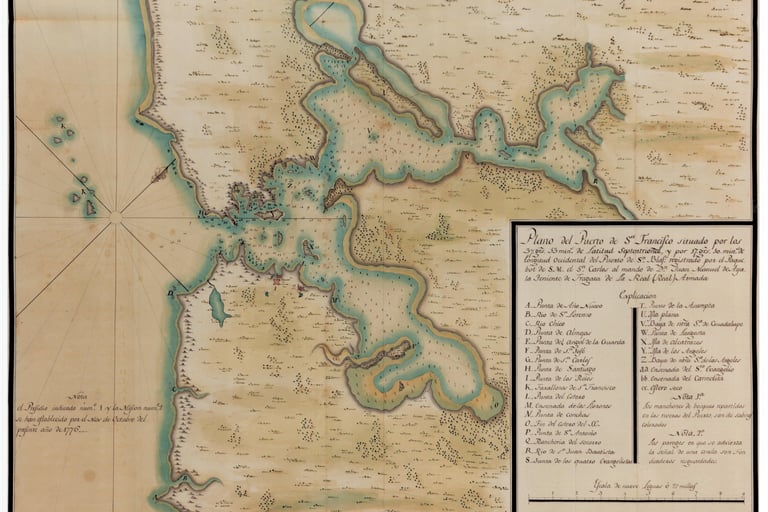
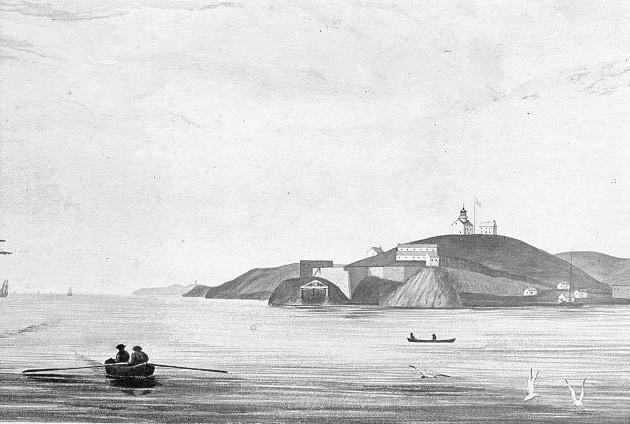
On August 5, 1775, Spanish naval officer Juan Manuel de Ayala became the first European to sail into San Francisco Bay.
While mapping the bay, he named the island:
La Isla de los Alcatraces
The name translates roughly to:
"Island of the Pelicans"
Although modern ornithologists note that the birds were more likely cormorants than pelicans, the name eventually evolved into simply:
Alcatraz
Ayala's charts became the first official maps showing the island and remained in use for decades by Spanish navigators.
3. Mexican Rule (1821–1846)
After Mexico gained independence from Spain in 1821, California became Mexican territory.
During this period:
Alcatraz remained largely undeveloped.
It was used primarily as a navigational landmark.
No permanent structures were built.
The island remained a refuge for seabirds.
Its strategic location, however, was becoming increasingly obvious to military planners.
4. The United States Takes California
In 1846, during the Mexican–American War, American forces seized California.
Following the war:
California officially became U.S. territory.
The discovery of gold in 1848 transformed San Francisco almost overnight.
Military leaders recognized that the entrance to San Francisco Bay needed protection.
Alcatraz sat directly inside the bay entrance, making it an ideal defensive position.
5. The Gold Rush Changes Everything
The California Gold Rush brought hundreds of thousands of people to California.
Officials feared:
Foreign invasion
Pirates
Naval attacks
Protection of valuable shipping
On November 6, 1850, President Millard Fillmore signed an executive order reserving Alcatraz Island exclusively for military purposes.
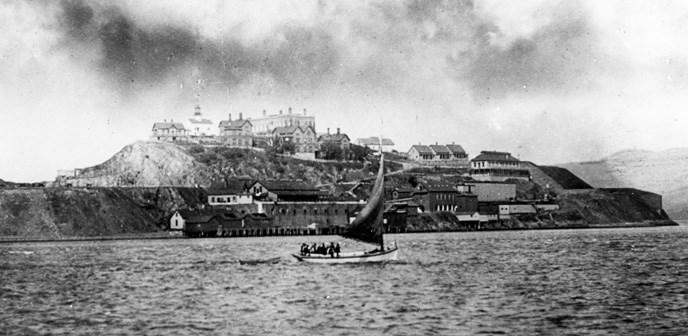
6. Building Fortress Alcatraz
Construction began in 1853.
Workers built:
Massive brick fortifications
Gun batteries
Barracks
Powder magazines
Defensive walls
Eventually the island mounted approximately 100 cannons, making it one of the most heavily armed locations on the Pacific Coast.
Interestingly, the guns were never fired in combat.
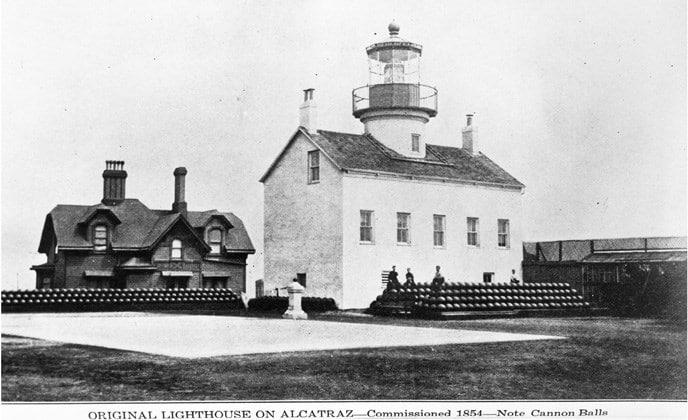
7. The First West Coast Lighthouse
In 1854, Alcatraz became home to:
The first lighthouse on the Pacific Coast of the United States.
A lighthouse that guided ships entering San Francisco Bay.
A fog bell to assist navigation during heavy fog.
This lighthouse dramatically reduced shipwrecks entering the harbor.
8. The Civil War Years
When the American Civil War began, Alcatraz became a vital military installation.
Its roles included:
Coastal defense
Artillery fortress
Military supply depot
Prison for Confederate sympathizers and military offenders
Although the island remained fully armed, no Confederate attack on San Francisco ever occurred.
9. Becoming a Military Prison
By 1861 the Army had already begun holding military prisoners on the island, and in 1868 it was formally designated a military prison.
Prisoners included:
Soldiers convicted of desertion
Murderers
Thieves
Military prisoners awaiting trial
Unlike the later federal prison, many military prisoners worked outdoors constructing roads, buildings, and gardens.
10. Expansion in the Late 1800s
Throughout the late nineteenth century, Alcatraz expanded considerably.
New additions included:
Larger prison facilities
Officers' housing
Workshops
Kitchens
Water storage
Improved docks
The island increasingly resembled a self-contained military community.
11. Notable Military Prisoners
During the military prison era, Alcatraz held a wide variety of inmates.
These included:
Soldiers convicted of serious crimes.
Several Hopi men imprisoned after resisting federal assimilation policies in the 1890s.
U.S. soldiers who fought alongside Filipino forces during the Philippine–American War.
12. The Massive Concrete Prison (1909–1912)
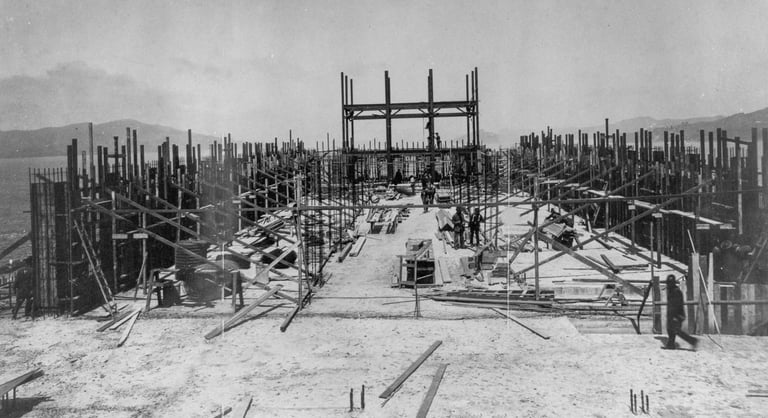
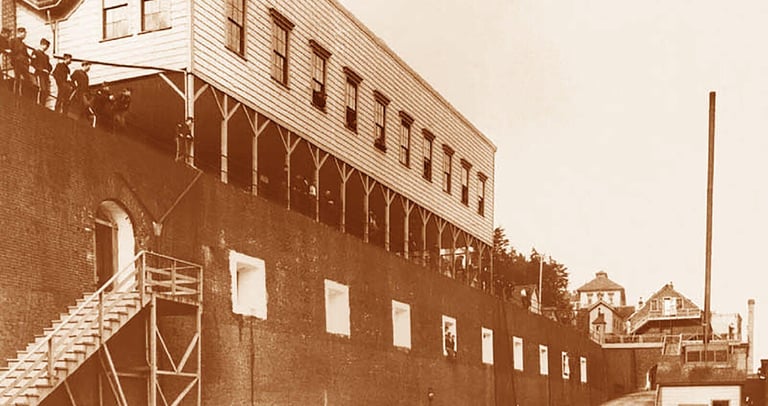
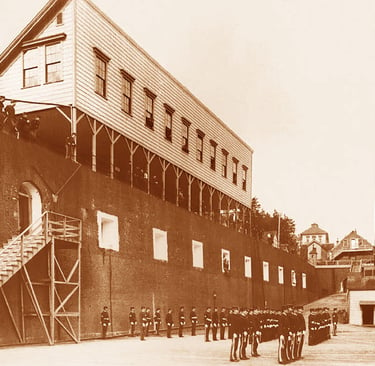
The original brick fortress was becoming obsolete.
Beginning in 1909:
Much of the old fort was demolished.
Military prisoners performed much of the labor.
A massive reinforced-concrete prison was built between 1910 and 1912.
When completed, it was considered one of the largest reinforced-concrete buildings in the world.
13. The Pacific Branch U.S. Military Prison
The new facility became known as the Pacific Branch, U.S. Military Prison (later the U.S. Disciplinary Barracks, Pacific Branch).
It featured:
Modern cell blocks
Steel bars
Large dining hall
Hospital
Administration building
Exercise yards
Although secure, conditions remained less restrictive than those later imposed under the federal prison system.
14. Why the Army Gave Up Alcatraz
By the early 1930s:
Coastal artillery had become outdated.
New military technologies reduced the island's strategic value.
The military prison was expensive to operate.
Meanwhile, the U.S. government needed a maximum-security prison capable of housing the nation's most dangerous and escape-prone criminals during the Prohibition era.
15. Transfer to the Department of Justice
In 1933, the U.S. Army transferred Alcatraz to the U.S. Department of Justice.
The prison underwent extensive renovations:
Bars strengthened
Escape routes sealed
Gun galleries installed
Cell doors modernized
Security greatly increased
These changes transformed the military prison into what would become America's most secure federal penitentiary.
Conclusion
Before Alcatraz became America's most famous federal prison, it had already experienced nearly 160 years of remarkable history. It evolved from an isolated seabird sanctuary into a Spanish landmark, then a strategic U.S. fortress, the first lighthouse on the Pacific Coast, and finally one of the Army's most important military prisons. By the time the first federal prisoners arrived on August 11, 1934, the island's infrastructure and reputation for isolation made it the ideal location for a maximum-security penitentiary.
History of Alcatraz: From the 1963 Closure to Present Day
Introduction
When Alcatraz Federal Penitentiary closed on March 21, 1963, it ended one of the most famous prison eras in American history. But the story of Alcatraz did not end when the last prisoners were removed from the island. After the prison closed, Alcatraz went through a period of abandonment, became the site of a major Native American protest, was added to the National Park system, and eventually became one of the most visited historic sites in the United States. Today, Alcatraz is preserved as part of the Golden Gate National Recreation Area and is remembered not only as a prison, but also as a place of military history, Indigenous activism, historic preservation, wildlife, tourism, and public education.
1. The Prison Closes — March 21, 1963
Alcatraz Federal Penitentiary officially closed in 1963 after operating as a federal prison from 1934 to 1963. The closure was not because the prison had suddenly become easy to escape from. Instead, it was mainly because Alcatraz had become too expensive to operate. Everything on the island had to be transported by boat, including food, supplies, fuel, and even fresh water. The buildings were also aging, and the island’s salt air caused constant deterioration.
The final inmates were transferred to other federal prisons, and the Bureau of Prisons left the island. For the first time in decades, the cellhouse, guard towers, workshops, docks, and staff buildings were no longer part of an active prison system. The island became federal surplus property, but no clear future use was immediately chosen.
2. Abandonment After the Prison Era
After the prison closed, Alcatraz entered a strange in-between period. The island still contained the massive cellhouse, the warden’s house, staff housing, guard towers, utility buildings, and other structures, but many of them were already in poor condition. Without daily maintenance, the abandoned buildings continued to decay. Wind, fog, salt air, and vandalism damaged the island’s structures.
During this period, different ideas were proposed for the island. Some people imagined turning Alcatraz into a commercial attraction, a monument, or some other public use. But for several years after the prison closed, the island remained mostly unused. That emptiness helped set the stage for one of the most important events in modern Alcatraz history: the Native American occupation.
3. Early Native American Protest — 1964
Before the famous 1969 occupation, there was an earlier Native American protest on Alcatraz in 1964. A small group of Sioux activists claimed the island under treaty arguments involving surplus federal land. This first occupation lasted only a short time, but it introduced an idea that would return with much greater force later in the decade: that Alcatraz could become a symbol of Indigenous rights and resistance.
4. The Occupation of Alcatraz — 1969 to 1971
The most important event on Alcatraz after the prison closure was the Occupation of Alcatraz, which began on November 20, 1969. A group calling itself Indians of All Tribes occupied the island and claimed it as Native land. The occupation lasted until June 11, 1971, making it one of the most famous Native American protest actions of the 20th century.
The occupation was led by Native American activists and students, including figures such as Richard Oakes, LaNada Means, and others. John Trudell became one of the best-known voices of the occupation. The activists argued that the unused federal island should be returned for Native use, and they proposed creating a Native American cultural and educational center on Alcatraz.
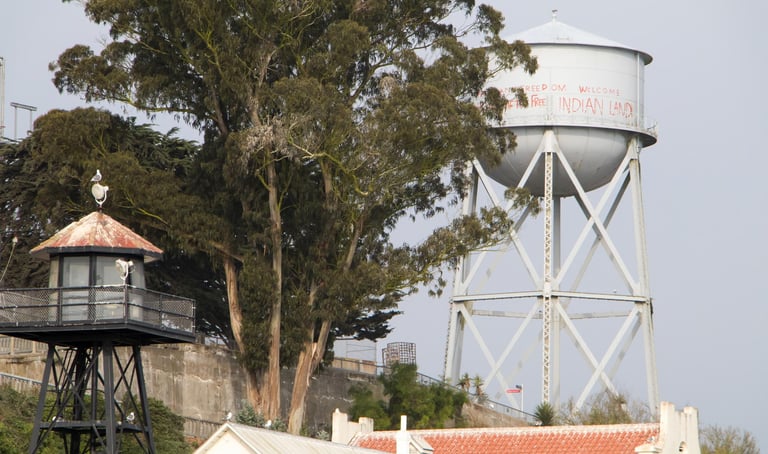
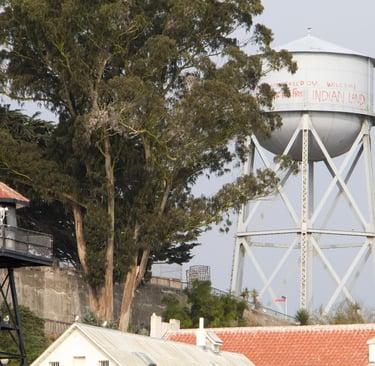
The occupation drew national attention. It helped bring Indigenous rights into the public spotlight and became a major inspiration for later Native American activism. During the occupation, the old prison island was transformed into a political symbol. Graffiti from the occupation, including messages such as “Indians Welcome” and “Free Indian Land,” became part of the island’s visible history and is still interpreted today as part of Alcatraz’s story.
The federal government eventually removed the remaining occupiers in June 1971. Although the occupation did not result in the island being permanently transferred to Native control, it had a lasting impact. It helped energize the modern Native American rights movement and changed the meaning of Alcatraz forever.
5. Alcatraz Becomes Part of the National Park System
In 1972, Alcatraz was added to the newly created Golden Gate National Recreation Area, which is managed by the National Park Service. This was a major turning point. Instead of being sold or redeveloped, Alcatraz would be preserved as a historic site for the public.
The island opened to the public in 1973. Visitors could now tour the former prison, walk through the cellhouse, see the old prison yard, view the remains of staff housing, and learn about the island’s military, prison, and Native American history.
This changed Alcatraz from a place built to keep people in into a place people lined up to visit. The island became one of San Francisco’s most famous attractions and one of the most recognizable historic prison sites in the world.
6. Development as a Historic Tourist Site
As tourism grew, Alcatraz became known for its powerful visitor experience. The National Park Service developed exhibits, guided programs, and interpretive materials explaining the island’s many layers of history. The most famous visitor experience became the cellhouse audio tour, which allows visitors to hear stories about prison life, escape attempts, guards, inmates, and daily routines inside the penitentiary.
Visitors today can see locations connected to famous inmates and escape attempts, including the main cellhouse, the dining hall, the recreation yard, the library area, the hospital wing, and areas connected to the 1962 escape by Frank Morris and the Anglin brothers. But the modern interpretation of Alcatraz also goes beyond crime stories. It includes the island’s military past, the families who lived there, the Native American occupation, gardens, wildlife, and preservation work.
7. Preservation and Restoration Work
Because Alcatraz sits in the middle of San Francisco Bay, preservation is a constant challenge. Salt water, fog, wind, rust, and age continue to damage the island’s buildings. Many structures from the military and prison eras were already deteriorating by the time the National Park Service took over. Since then, preservation projects have focused on stabilizing important buildings, protecting visitor safety, and preserving the island’s historic appearance.
Some areas have been restored or stabilized, while others remain ruins. The warden’s house, for example, was damaged by fire during the Native American occupation era and remains a dramatic ruin overlooking the bay. Other structures, such as parts of the cellhouse, guardhouse, dock area, and support buildings, have received preservation attention over time. A major restoration of the Guardhouse Complex was revealed in 2015 after a National Park Service improvement project.
Preservation at Alcatraz is not about making the island look new. Instead, the goal is to protect the historic fabric of the site while allowing visitors to understand the passage of time. The cracked concrete, rusted metal, peeling paint, ruins, and restored areas all help tell the story of Alcatraz after abandonment.
8. The Historic Gardens of Alcatraz
One of the lesser-known parts of modern Alcatraz history is the restoration of the island’s gardens. During the military and prison eras, residents of Alcatraz planted gardens around the island. Prison staff families, guards, and even some inmates helped care for plants in the harsh island environment. After the prison closed, many of these gardens were abandoned.
In the 2000s, the Alcatraz Historic Gardens Project began as a partnership involving the National Park Service, the Golden Gate National Parks Conservancy, and the Garden Conservancy. The project worked to recover, restore, and maintain historic garden areas created by people who had lived on the island.
Today, the gardens are an important part of the island’s interpretation. They show that Alcatraz was not only a prison. It was also a workplace, a military post, a family community, and a place where people tried to create beauty in a harsh environment.
9. Alcatraz as a Wildlife Habitat
Modern Alcatraz is also important as a habitat for birds and other wildlife. The island’s cliffs, ruins, vegetation, and restricted areas provide nesting and resting places for seabirds. Some sections of the island are closed seasonally or permanently to protect wildlife. This adds another layer to the island’s present-day identity: it is both a historic site and a protected natural area within San Francisco Bay.
10. Alcatraz in Popular Culture
Since closing as a prison, Alcatraz has become one of the most famous prison symbols in the world. Its reputation was strengthened by books, documentaries, television programs, and movies such as Escape from Alcatraz and The Rock. Popular culture often presents Alcatraz as mysterious, brutal, and almost impossible to escape from.
This fame helped make Alcatraz a major tourist destination. Many visitors come because they know the stories of Al Capone, George “Machine Gun” Kelly, Robert Stroud, Frank Morris, John Anglin, Clarence Anglin, and the island’s many escape attempts. But once they arrive, they also encounter a much broader history than the prison legend alone.
11. Alcatraz Today
Today, Alcatraz Island is managed by the National Park Service as part of the Golden Gate National Recreation Area. It is open to visitors by ferry, and the National Park Service recommends spending at least a few hours exploring the island, exhibits, videos, and audio tours.
The island is now a place of public memory. It preserves the federal prison story, but it also tells the stories of military prisoners, correctional officers, prison families, Native American activists, gardeners, preservation workers, and visitors from around the world. Alcatraz now serves as an educational site rather than a place of confinement. The Golden Gate National Parks Conservancy describes the island’s modern purpose as one that “opens minds instead of closing doors.”
12. Recent Discussions About Reopening Alcatraz
In recent years, Alcatraz has occasionally appeared in political discussions about prisons and crime. In 2025, President Donald Trump publicly proposed reopening and rebuilding Alcatraz as a prison. However, reports noted major practical obstacles, including the island’s deteriorated condition, lack of modern prison infrastructure, and the fact that it has long functioned as a national park and tourist destination. As of the latest available information, Alcatraz remains a National Park Service historic site, not an active prison.
Contact
Questions? Reach out anytime.
info@uspalcatraz.net